

Let's be honest: quality pajamas and bedding can be an investment. And when you're comparing prices, it's natural to wonder what makes one set worth more than another.
At Earthly Threads, we think customers should know what they're buying, beyond just the feel or appearance of a product. So we're pulling back the curtain on what goes into our viscose from bamboo pajamas and sheets, from the material itself to the manufacturing process and the details that bring each finished piece to life.
The cost of a product reflects more than just the material you see. It reflects the many steps, materials, and decisions that go into making it.
Why Are Bamboo Pajamas So Expensive?
Bamboo has become a popular source material for textiles, and it's easy to understand why. As a plant, bamboo grows quickly and can be cultivated with relatively few agricultural inputs under certain conditions. But turning bamboo into the silky fabric used in clothing and bedding takes more than harvesting the plant.
Most soft textiles marketed as bamboo are actually viscose made from bamboo. This is a regenerated cellulose fiber: cellulose is extracted from the bamboo plant, processed, and transformed into a new textile fiber. It's important to understand that this is a manufacturing process, not simply bamboo being spun into thread.
Viscose is valued for its smooth hand, soft, gentle feel and beautiful drape. As a regenerated cellulose fiber, it can also absorb moisture. These characteristics make it a popular choice for clothing and bedding that sit close to the body.
What Is Viscose Made From Bamboo?
One of the biggest things to understand about viscose from bamboo is that the finished fabric doesn't appear overnight. There's a series of specialized steps between the original plant source and the pajamas in your drawer.
Viscose made from bamboo begins with cellulose, a natural component of the bamboo plant. However, the finished textile is not raw bamboo fiber. It's a regenerated fiber created by processing that cellulose and transforming it into a material that can be spun into yarn.
This distinction matters because the properties of the finished fabric come from the fiber and its manufacturing process, not simply from the fact that bamboo was the original plant source.
Want to learn more? Read What You Should Know About Viscose from Bamboo.
How Is Bamboo Viscose Fabric Made?
The process of turning bamboo into viscose fabric involves several specialized steps.
It begins with bamboo cellulose, which is processed into a solution. That solution is then regenerated into fine fibers, which are spun into yarn. The yarn is woven or knitted into fabric before undergoing additional steps such as dyeing and finishing. Finally, the fabric can be cut and sewn into finished garments or bedding.

Each stage requires equipment, materials, labor, and careful production management. The process also involves chemical treatments, which is why it's important to be transparent about what viscose is rather than suggesting that the finished textile is simply natural bamboo fiber.
This manufacturing process is one part of what contributes to the cost. The price of a finished textile reflects not only its original plant source but also the processing and resources required to transform that source into a usable fabric.
Want to learn more? Read Is Bamboo Fabric Safe? Bamboo Process Explained.
What Determines the Quality of Bamboo Pajamas and Sheets?
Not all fabrics made from the same fiber are identical.
The finished feel and quality of a textile depend on several factors, including yarn, fabric construction, weight, finishing, and how the material is handled during production. Two garments can share a similar fiber composition and still feel very different.
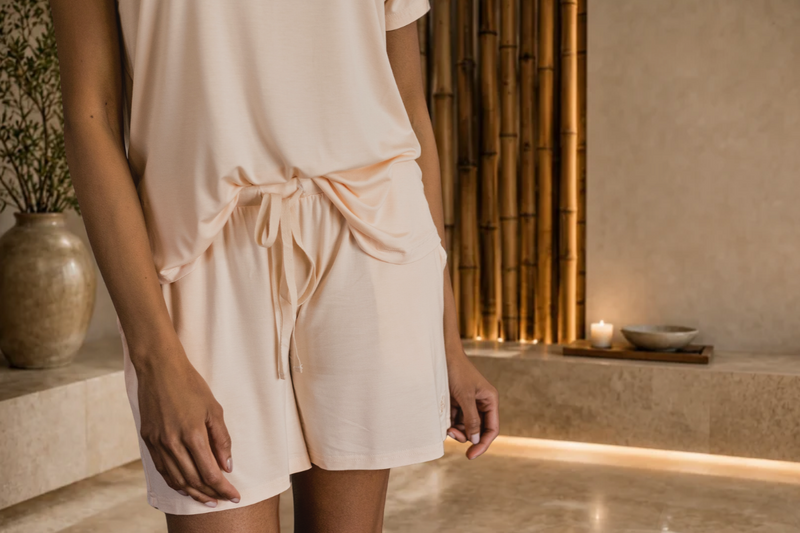
For pajamas, details matter. The balance of viscose and spandex, the way the fabric is knitted, the fit, stitching, seams, and finishing all contribute to the finished piece. The same applies to bedding, where fabric composition, weight, and finishing affect how sheets feel and drape across a bed.
These are the details that can be easy to overlook when comparing two price tags online. But they're part of what makes a finished product more than just its fiber content.
Quality isn't determined by one specification alone. It's the combination of material, construction, and attention to the finished product.

Explore our Women's Bamboo Sleepwear, Men's Bamboo Loungewear, and Kids' Bamboo Pajamas collections.
What Goes Into Quality and Testing?
We believe comfort should come with confidence in the materials that make up the products you bring into your home.
That's one reason our pajamas carry OEKO-TEX® STANDARD 100 certification. This certification means that the certified textile articles have been tested for more than 1,000 harmful substances and meet the applicable OEKO-TEX® limit values. Testing requirements vary depending on the product's intended use and level of skin contact.
It's worth understanding what that means: OEKO-TEX® STANDARD 100 is a textile testing certification. It isn't a claim that a product is chemical-free, organic, hypoallergenic, or environmentally harmless. Rather, it provides an additional layer of testing and assurance against specified harmful substances.
Testing and certification require time, resources, and oversight. They contribute to the efforts beyond simply producing a garment and are part of our commitment to being thoughtful about what goes into the products we offer.
Want to understand textile testing a little better? Read Why OEKO-TEX® Certification Matters.
What Else Contributes to the Cost of Bamboo Pajamas?
There's another side of the price that isn't always visible: everything it takes to bring a finished product to your door.
Product development, sizing, production, quality checks, packaging, shipping, storage, and fulfillment all contribute to the cost of running a clothing and bedding business. Behind each order are people making decisions, coordinating production, checking details, and getting products ready for customers.
For a small business, those operations matter. Every finished piece represents more than the material itself; it represents the people and processes involved in bringing it to life.
We don't believe a higher price automatically means a better product. But we do believe customers deserve to know what contributes to the price they're paying.
Want to make the most of your favorite pieces? Read our Care and Maintenance Guide for Bamboo Products.
Are Bamboo Pajamas Worth the Investment?
At the end of the day, we understand that price matters. Everyone has a budget, and we never expect customers to overlook that. However, knowing what contributes to a product can help put its price in perspective.
From the original plant source and the process that transforms it into fabric to the construction, testing, and people behind the finished product, there's more to a pajama set than meets the eye.
At Earthly Threads, we're proud to offer products that reflect the details we care about, from fabric composition to the standards we look for in our materials. Our goal isn't simply to make another pair of pajamas. It's to create pieces that bring comfort into everyday routines and become part of the little moments worth holding onto.
Comfort Without Compromise. That's what matters to us.