

Quick answer: Bamboo and eucalyptus sheets can both be comfortable, breathable options, but the “better” choice depends on the fiber type and what you want most from your sheets. If you want a softer, more fluid feel and strong moisture-wicking, bamboo (especially bamboo lyocell) is often the better fit. If you want a cooler-to-the-touch feel and strong wrinkle resistance, eucalyptus lyocell (often sold as TENCEL Lyocell) is a strong option.
To get a good night’s sleep, the materials you choose for your bed sheets can make a world of difference. Bamboo bedding and bamboo bed sheets are becoming the fabrics of choice for those who prioritize both comfort and sustainability.
If you’ve ever been confused by the variety of sheet options available, you’re not alone. Here’s how bamboo and eucalyptus sheets compare on cooling, feel, sustainability, cost, and care.
Why Bamboo and Eucalyptus Are Replacing Cotton Sheets
Manufacturing traditional cotton sheets is a resource-intensive process, as cotton crops are notorious for their excessive water usage and pesticide dependence. Bamboo and eucalyptus fibers are eco-friendly, biodegradable, and renewable resources. Today, many people are shifting towards more sustainable alternatives like eucalyptus and bamboo. If you’re comparing cotton alternatives in more detail, see bamboo vs cotton sheets.
Eco-friendly bedding materials aren’t just good for the planet; they’re also better for you. Bamboo and eucalyptus, for example, are naturally hypoallergenic and moisture-wicking, offering a comfortable sleeping environment while lowering your carbon footprint. Both materials are a good fit if you have sensitive skin because they are naturally hypoallergenic.
What Are Bamboo Sheets?
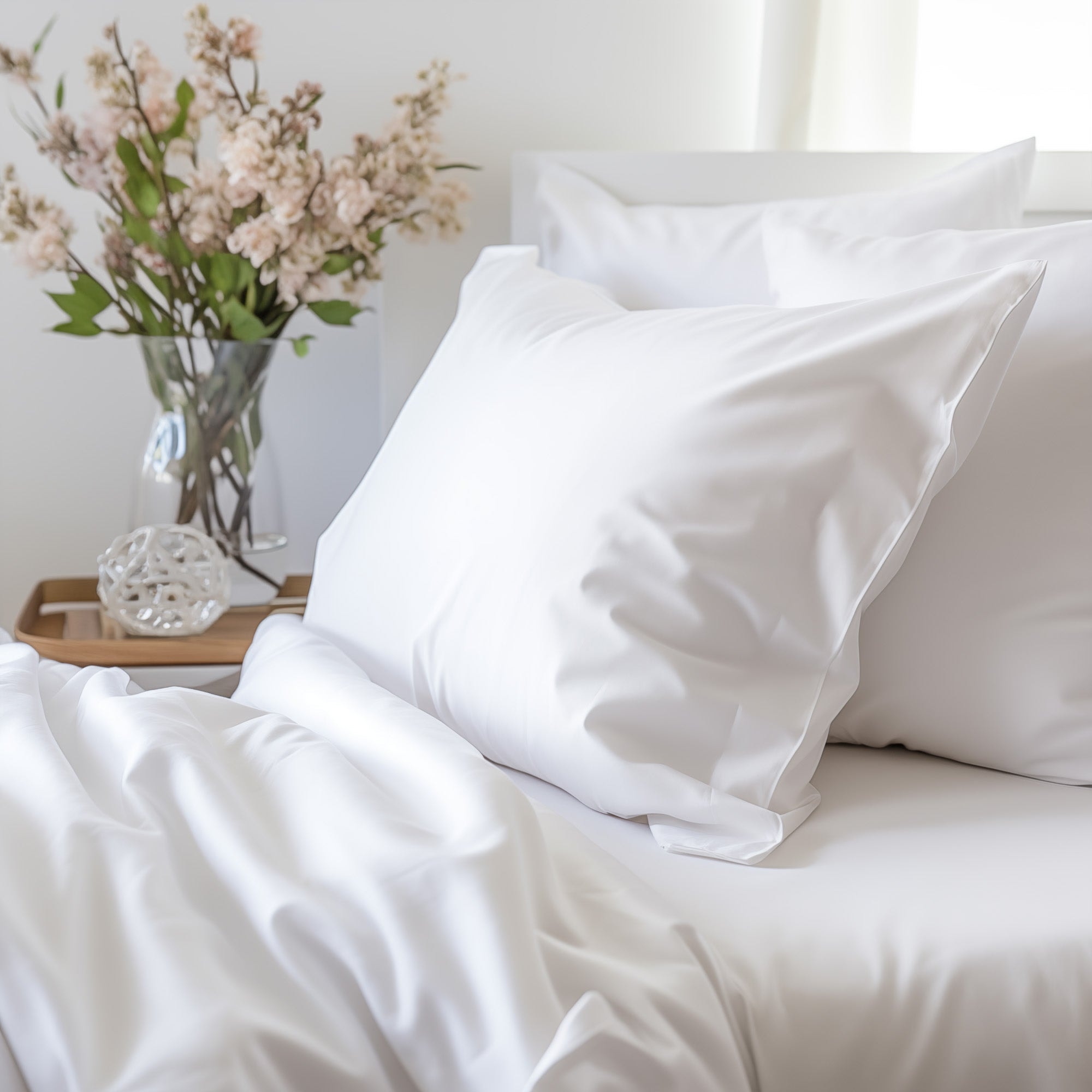
The popularity of bamboo bedding has surged in recent years, and for good reason. Bamboo fabric is known for its breathability, softness, antibacterial properties, and allergen-free features. Bamboo is not just a renewable resource; it also brings a host of ecological benefits, including soil stabilization and carbon sequestration.
Bamboo Sheet Benefits for Softness, Breathability, and Moisture-Wicking
-
Softness: Many bamboo sheets feel smooth and soft, but the exact hand-feel varies by construction and whether the fabric is bamboo viscose or bamboo lyocell.
-
Breathability: Bamboo-derived fabrics are typically breathable, which can help reduce heat buildup.
-
Moisture-wicking: Bamboo sheets can pull moisture away from your skin, which can feel more comfortable if you sweat at night.
If you deal with night sweats, bamboo can help by pulling moisture away from your skin as you sleep.
What Are Eucalyptus Sheets?
If bamboo sheets have taken the eco-friendly bedding world by storm, eucalyptus bedding sheets are certainly not far behind. Manufacturers turn eucalyptus wood pulp into lyocell fibers through a closed-loop process. Like bamboo, eucalyptus is also a rapidly renewable resource. Eucalyptus trees can grow quickly with less water, making them a sustainable choice for bed sheets. Eucalyptus sheets, also known as Tencel sheets, are often compared favorably to other types of sheets like cotton.
When you see TENCEL Lyocell, that typically refers to a branded lyocell fiber made by Lenzing; many eucalyptus lyocell sheets use this fiber.
-
Manufacturers harvest eucalyptus wood and turn it into purified wood pulp.
-
They dissolve the pulp in a solvent to create a spinning solution.
-
They extrude the solution to form lyocell fibers.
-
They recover and reuse most of the solvent as part of a closed-loop manufacturing process.
-
They spin the fibers into yarn and weave or knit the fabric for sheets.
Eucalyptus Sheet Benefits for Cooling, Durability, and Antimicrobial Protection
-
Cooling feel: Eucalyptus lyocell often feels cool and smooth on contact.
-
Durability: Eucalyptus sheets can be strong and long-lasting when cared for properly.
-
Antimicrobial properties: Eucalyptus sheets are commonly described as naturally resistant to odors and bacteria.
Bamboo vs Eucalyptus Sheets Side-by-Side Comparison
|
Category |
Bamboo sheets |
Eucalyptus (lyocell) sheets |
|
Cooling performance |
Often cool through breathability and moisture management. |
Often feels cool on contact and stays breathable. |
|
Feel (hand-feel) |
Tends to feel softer and more fluid. |
Usually feels smoother and crisper, while bamboo tends to feel softer and more fluid. |
|
Moisture-wicking |
Commonly strong, which can help if you sweat at night. |
Also strong; often paired with a cool-to-touch sensation. |
|
Sustainability (depends on processing) |
Varies widely: bamboo viscose/rayon is common, while bamboo lyocell is typically positioned as the more closed-loop option. Fast growth can be a benefit, but land-use and invasiveness vary by region. |
Often produced via a closed-loop manufacturing process; look for sourcing signals such as FSC-certified eucalyptus fibers. Large-scale eucalyptus plantations can raise biodiversity and monoculture concerns depending on sourcing. |
|
Durability & pilling |
Durability depends on weave and yarn quality; some constructions are more prone to pilling than others. |
Often marketed as strong and non-pilling, though performance still depends on fabric construction. |
|
Wrinkles |
Can wrinkle; some weaves perform better than others. |
Often more wrinkle-resistant than many bamboo constructions. |
|
Care |
Usually cold wash and gentle cycle; avoid harsh detergents and high heat. |
Usually cold wash and gentle cycle; often stays smoother and wrinkle-resistant with gentle drying. |
|
Cost |
Commonly priced competitively, but varies by fiber type (viscose vs lyocell) and construction. |
Often priced slightly higher, especially when labeled TENCEL Lyocell. |
|
What to look for |
Clear labeling for bamboo viscose vs bamboo lyocell, plus certifications (for example OEKO-TEX Standard 100). |
Clear lyocell labeling (including TENCEL Lyocell), plus FSC sourcing and OEKO-TEX Standard 100 where available. |
References: For background on lyocell solvent recovery and closed-loop production, see Lenzing’s TENCEL Lyocell information: https://www.tencel.com/lyocell. For certification baselines, see OEKO-TEX Standard 100 and FSC.
Both materials perform well, but the better choice depends on whether you prioritize softness, cooling feel, cost, or sourcing method. If you’d like to learn more about how bamboo sheets stand against other types of sheets, check out this article comparing them to bamboo sheets vs linen sheets .
Bamboo vs Eucalyptus Sheets for Hot Sleepers
If you tend to overheat at night, both materials offer cooling benefits, but they work in different ways.
Why Bamboo Sheets Deliver Sustained Cooling
Bamboo sheets often feel cooler over time because breathability and moisture-wicking can help reduce the damp, trapped-heat feeling that wakes you up. This type of cooling tends to be more noticeable if you sweat at night.
How Eucalyptus Sheets Feel Cool on Contact
Eucalyptus lyocell often feels cool immediately when it touches your skin. If you like a smooth, crisp feel and that instant cool-to-the-touch sensation, eucalyptus sheets can be a good match.
Which Sheet Is Better for Hot Sleepers
If you want cooling driven by moisture management, bamboo can be the better option. If you prefer a consistently smooth, cool-to-touch feel and wrinkle-resistant performance, eucalyptus lyocell can be the better fit.
How to Care for Eucalyptus and Bamboo Sheets
Taking good care of your sheets not only prolongs their life but also makes for a more sustainable choice in the long run. By adhering to proper care instructions, you can ensure your bed sheets remain comfortable and vibrant for years to come.
Cleaning and Maintaining Bamboo Sheets
Bamboo sheets are generally easy to take care of but do require some special considerations. To maintain their softness and special properties, it’s best to wash them in cold water on a gentle cycle.
Avoid using bleach or a fabric softener as they can weaken the fibers over time. Air drying is recommended, although a tumble dry on low heat can also be used.
Cleaning and Maintaining Eucalyptus Sheets
Eucalyptus sheets are known for their natural cooling effects and antimicrobial properties. Eucalyptus sheets typically have a long lifespan and are durable, provided they are cared for properly. For best results, wash these sheets in cold water and avoid using bleach or harsh detergents. You can tumble dry them on low, or better yet, air dry them to maintain the integrity of the fibers and ensure longevity.
How Bamboo Rayon, Lyocell, and Linen Differ
Bamboo sheets are not one uniform material category. Many products labeled “bamboo” are made from bamboo rayon or bamboo viscose, which uses chemical processing to turn bamboo into a soft fabric. Bamboo lyocell uses a more closed-loop approach and is often positioned as the more sustainability-minded bamboo option. Bamboo linen is a less common, more mechanically processed fabric that tends to feel more textured and is harder to find in standard sheet sets.
Which Material Should You Choose by Sleep Type
-
If you’re a hot sleeper who wants cool-to-touch sheets: eucalyptus lyocell (including TENCEL Lyocell) is often a better match.
-
If you sweat at night and want moisture-wicking cooling: bamboo sheets can be a better fit, especially when you choose higher-quality constructions and clear labeling (for example, bamboo lyocell).
-
If you want wrinkle-resistant performance: eucalyptus lyocell is often the easier-care option.
-
If you’re prioritizing verified sustainability signals: look for OEKO-TEX Standard 100, FSC-certified eucalyptus fibers, and clear fiber labeling (lyocell vs viscose).
-
If you’re comparing premium alternatives on feel and price: you may also want to review bamboo sheets vs Egyptian cotton sheets.
Bamboo or Eucalyptus Sheets: Which Should You Buy?
Both eucalyptus and bamboo bed sheets can work well for cooling and comfort. The better pick comes down to how you sleep and how the fabric is made. Eucalyptus usually feels smoother and crisper, while bamboo tends to feel softer and more fluid.
If you want one simple rule: choose eucalyptus lyocell if you want cool-to-the-touch smoothness and wrinkle resistance, and choose bamboo if you want a softer feel and strong moisture-wicking performance. For either option, look for clear fiber labeling and certifications so you can evaluate sustainability claims more confidently.
Frequently Asked Questions
Are bamboo sheets or eucalyptus sheets better for hot sleepers?
Both can be good for hot sleepers. Eucalyptus lyocell often feels cooler on contact, while bamboo can feel cooler over the night if you benefit from moisture-wicking and breathability.
What is the difference between Tencel and eucalyptus sheets?
TENCEL Lyocell is a branded lyocell fiber (made by Lenzing) that can be produced from eucalyptus wood. Many “eucalyptus sheets” are made with lyocell, and some specifically use TENCEL Lyocell.
Are bamboo sheets really eco-friendly?
It depends on the processing method. Bamboo viscose/rayon is common but more chemically intensive, while bamboo lyocell is typically associated with a more closed-loop approach. Certifications like OEKO-TEX Standard 100 and clear fiber labeling can help you verify claims.
Can you machine wash bamboo and eucalyptus sheets?
Yes, in most cases. Use cold water, a gentle cycle, and mild detergent, and avoid bleach. Low heat or air drying helps protect the fibers.
Do bamboo or eucalyptus sheets wrinkle?
Both can wrinkle, but eucalyptus lyocell is often more wrinkle-resistant. Drying gently and removing sheets promptly can help reduce wrinkles for either fabric.
Shop Earthly Threads Bamboo Essentials
If you like the breathable, gentle feel of bamboo, you can carry that comfort into more of your everyday routine. At Earthly Threads, you can explore bamboo essentials designed for softness and comfort, including our bamboo sheet sets and more. You can also read about the benefits of choosing bamboo sheets.